
Most people don’t know that 80% of decks in the U.S. are structurally deficient.
You read that right – a recent Washington Post article stated that “80% of decks in the U.S. are structurally deficient“. So now, you may be wondering, “is my deck structurally deficient?”.
A deteriorating deck can impact your safety, finances, and even your health. With so many decks across the west Michigan area, that’s an especially sobering thought. We see the aftermath of decaying decks almost every day. From a small deck with an almost completely rotted-out frame to the second-story deck that separated from the house and collapsed while a crew of painters was on it.
Ensure Your Deck Health
Here is the good news. You can take control of the situation and help ensure that your deck is safe. Making a deck inspection a part of your spring cleaning routine is solid suggestion. A fall inspection before winter weather sets in is also a great way to help ensure a long life for your deck. However, there are things that will require a professional to take a look at – like inspecting the ledger boards. What are ledger boards you ask?
A ledger board is a horizontal lumber beam attached to an existing wall and used to tie in construction elements such as porch roofs and decks. A deck ledger is installed as part of the deck frame construction. The frame is then attached at either end, with the deck joists butting up to it.
Things you can do as a homeowner:
- ⦁ Don’t allow water to pool on the deck
- ⦁ Push snow off the deck with a soft-bristled broom, if the snow has been there longer than a day or two
- ⦁ If you have a ground-level deck, try to inspect the deck structure with a flashlight
- ⦁ If you have a ground-level deck, look for and remove any ground contact points
Inspect Your Deck
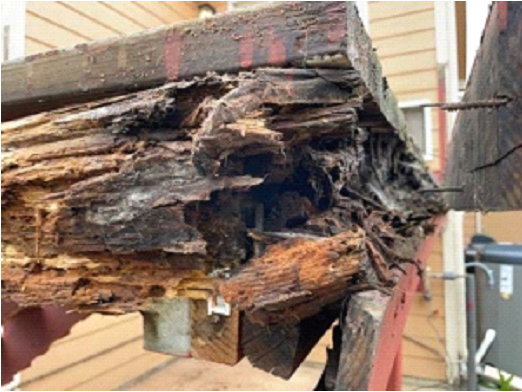
You should check your deck regularly to make sure it’s sound. This would include inspecting the posts, beams, and joists for signs of rot, decay, or damage. Check the deck for loose boards, nails, screws, or fasteners. Inspect the railing for loose railings or broken supports. Look at the deck floor for cracks, holes, or other defects. Even if you have pressure-treated wood, your deck is not immune to wood rot.
As you do your inspection, here are a few signs that your deck may be in need of repair or is unsafe:
- ⦁ Discoloration in the wood
- ⦁ Your deck is sagging or has shifted away from the house or other structure it’s attached to
- ⦁ Cracked or splintered joists
- ⦁ Insects like termites or carpenter ants around or near the deck
- ⦁ Steps creak or shift when you put weight on them
- ⦁ Wood beginning to splinter or powder
With our climate in and around Grand Rapids, Michigan, rot can be a significant issue in wood decks. In the winter rain and snow allow moisture to penetrate the deck structure. As temperatures drop below freezing, that moisture expands inside the boards creating pockets. These pockets allow more water to penetrate the wood and sit. This freeze, thaw cycle sets the stage for long-term damage.
Most issues can be simple to take care of, but if you’re unsure, call a professional.
Looking to build a deck that will last for decades with the least maintenance? You may want to consider the new steel frame systems on the market paired with composite decking. With these metal systems, there’s no wood to rot and almost no upkeep. Additionally, since the devastating Marshall Fire, many homeowners are looking for ways to help reduce fire risk.
Interested in a deck safety inspection?
Maybe you’d like to learn more about the products mentioned above, schedule an appointment with one of our specialists. You can also call Deck Masters USA at (616) 730-2726 if you have concerns or questions about your deck.